Nikon
- and tricks for arctic Photography
Please note that I am not sponsored by Nikon or a Nikon Ambassador. However, questions about my gear is something I get a lot during my work and I created this page for everyone who is curious.
Gear for the Arctic
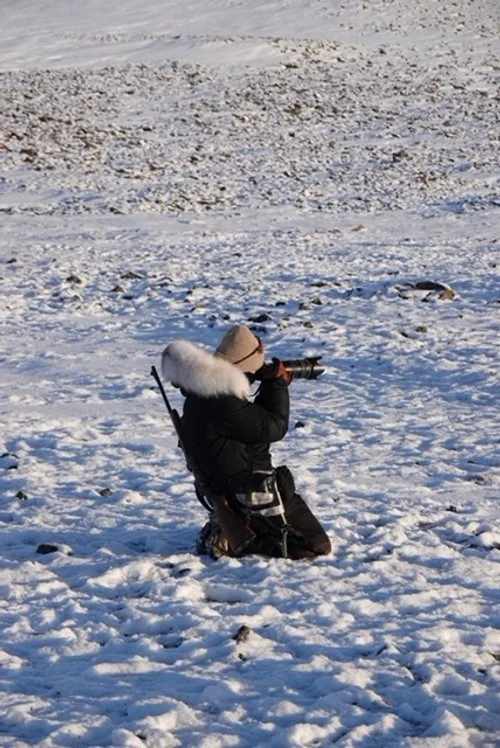
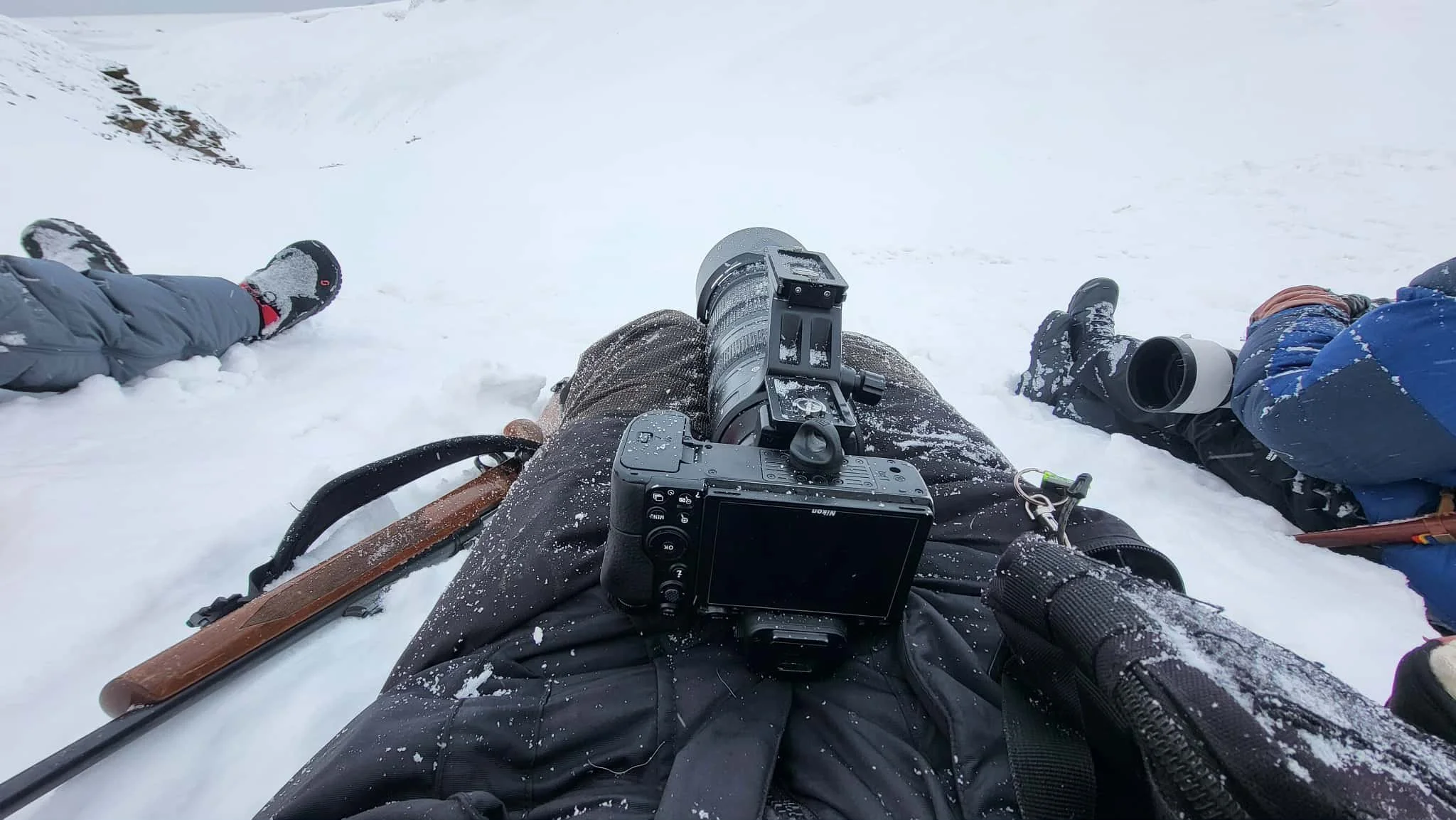
When we work in the arctic there is a long list of safety precautions we need to take. This includes safety equipment which can be a lot and heavy.
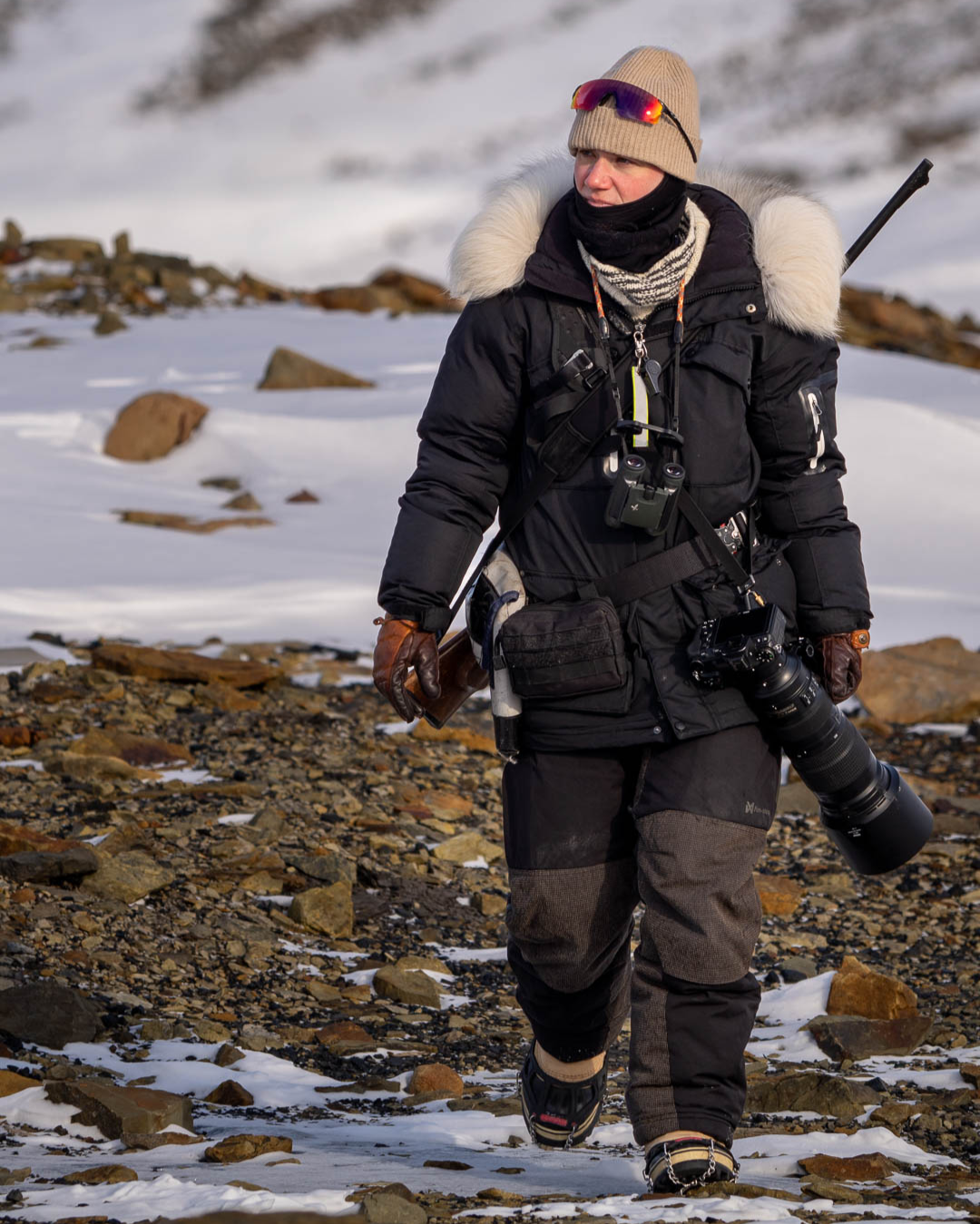
On Svalbard we do not have a lot of roads and during Winter time the roads might not even be possible to use. This means we walk and hike a lot when we scout for wildlife. Therefore it is important that we consider weight when we choose our camera setup.
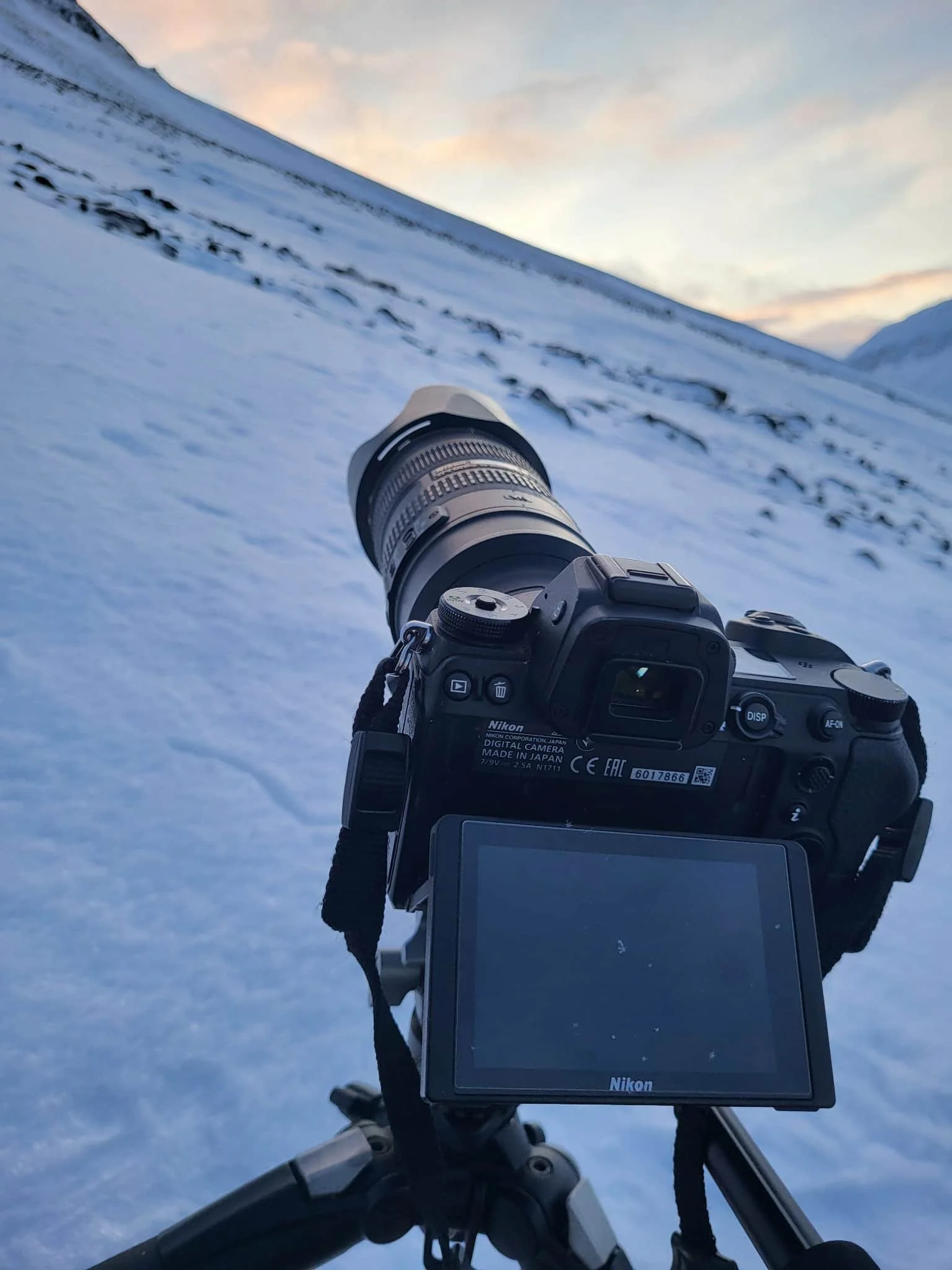
Usually, I only carry one lens with me so it is important that it can capture a wide range of shots. My AF-S NIKKOR 200-500mm f/5.6E ED VR is the lens I have used the most by far and is the one I will take with me on 90% of my trips. However, in my bag you will also find other lenses which are descripted further down.
AF-S NIKKOR 200-500mm f/5.6E ED VR
First and foremost: My AF-S NIKKOR 200-500mm f/5.6E ED VR. This is the heaviest duty lens I have ever had in my hand. You can compare it to an old Toyota Hilux - this lens can endure everything you will throw at it in terms of conditions. It will always work.
I bought this lens many years ago second-handed so at that time it was already used. Now I have spend hours and hours in the arctic with this lens and while other third-party lenses have fallen apart with less use, this lens has never even flinched. This lens got launched in August 2015 - meaning it can celebrate its 10 years anniversary.
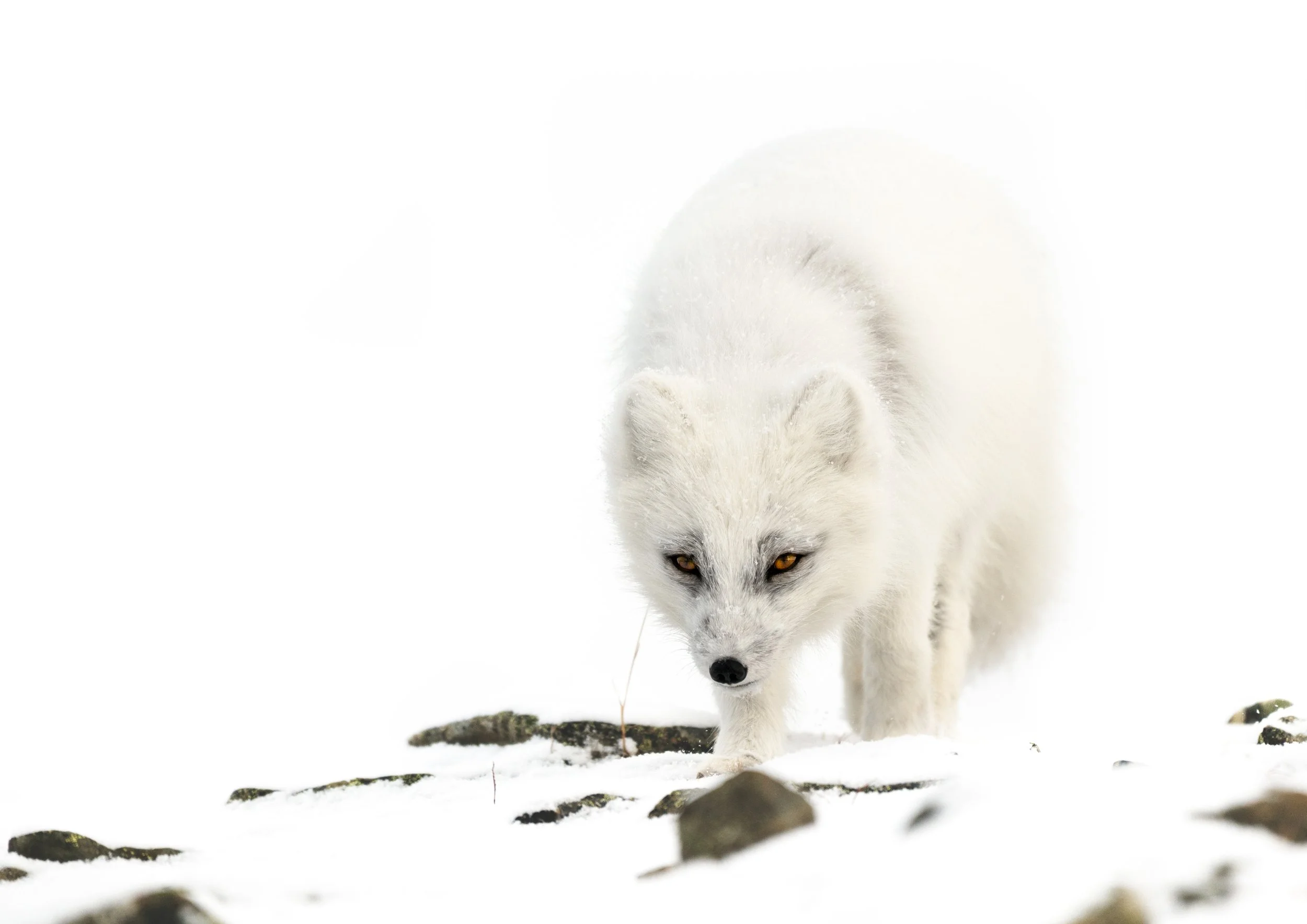
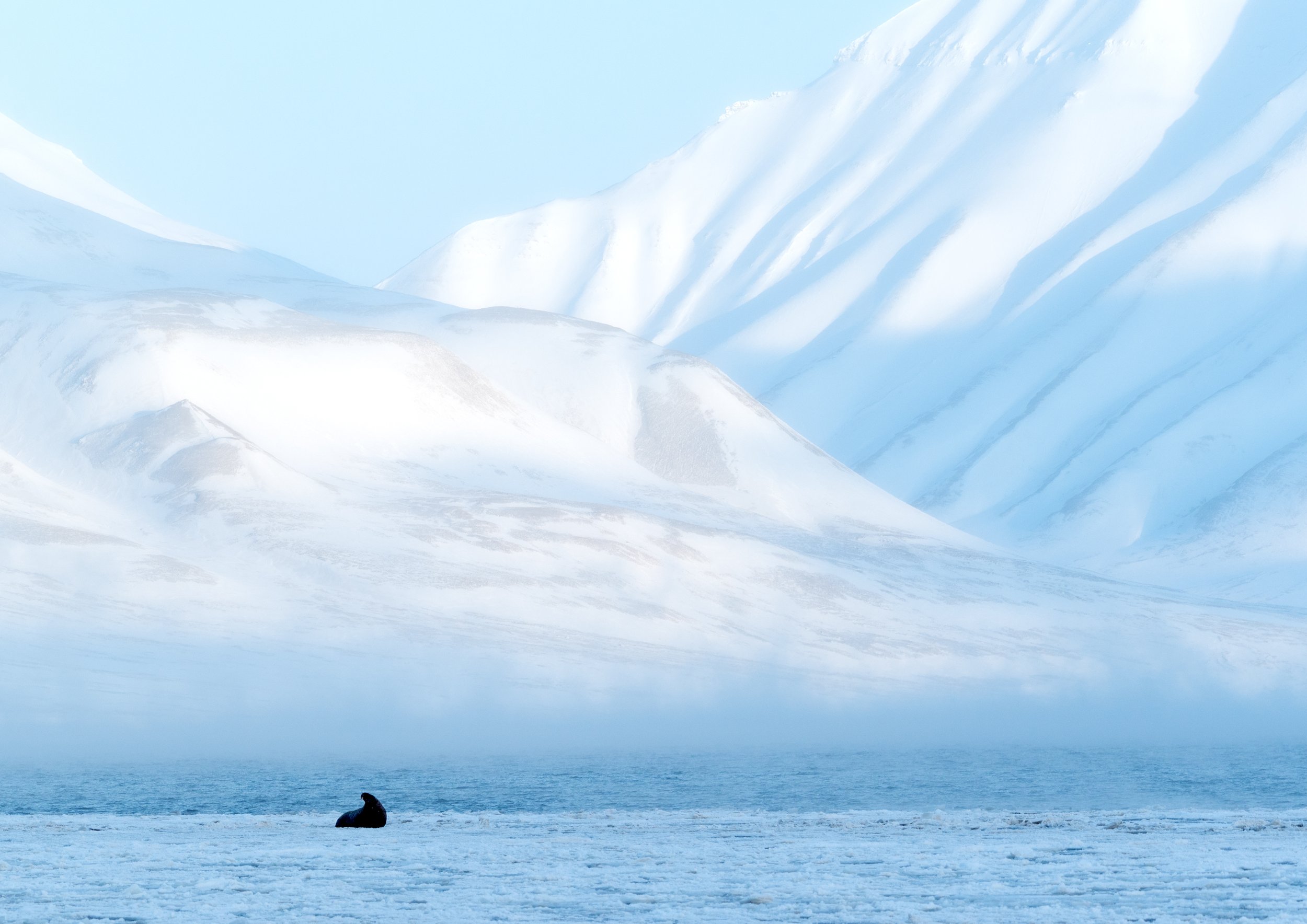
The 200-500mm gives a great variety of shots when I have to choose just a single lens to bring. Both the fox and the small walrus in the big landscape are shot with this lens.
This lens is old by now and I have tried the new 180-600mm Z-mount from Nikon and even though there is some speed difference, it is not necessarily noticeable and the 180-600mm aperture range goes from f5.6 but then at 300mm or more it will change to f6.0 and up to f6.3. However, a Z8 or Z9 with better ISO-handling could make up for this.
AF-S NIKKOR 70-200mm f/2.8G ED VR
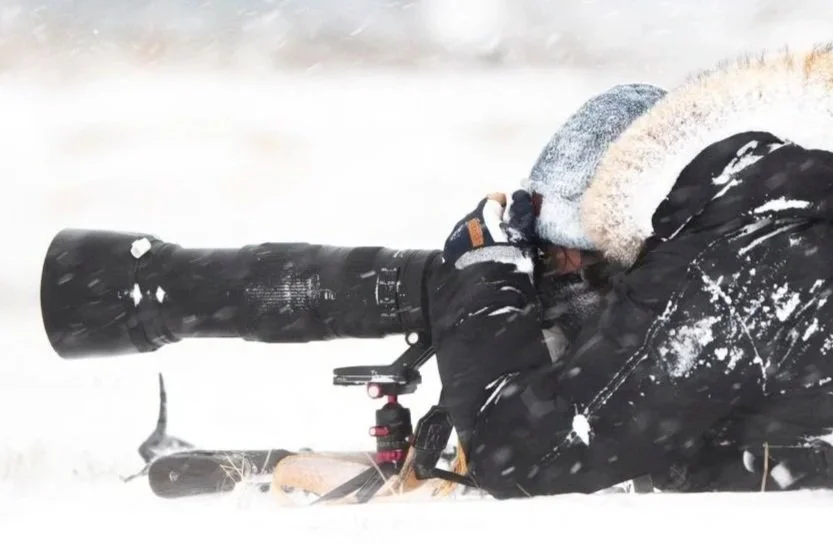
Of course 200-500mm is sometimes to much depending on what we wish to shoot. Another lens of mine is AF-S 70-200mm f/2.8G ED VR.
This lens is my go-to in the time after the Polar night. At this time of the year, the light is very limited and at some point we enter what we call the “Blue Hour”. The Sun is not yet over the horizon, creating the beautiful and very strong blue light. The light conditions are tricky and you need to be patience to work with this light.
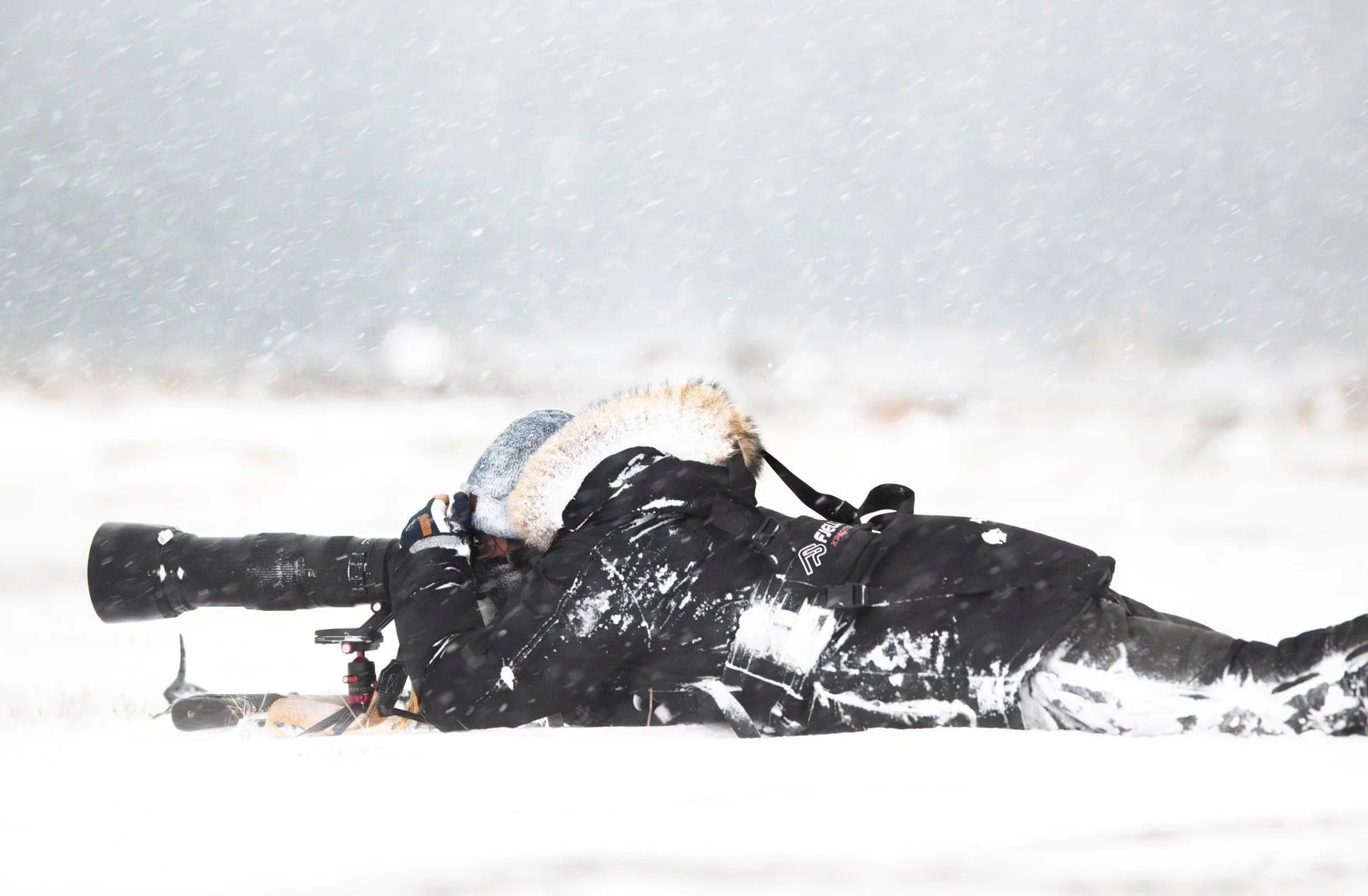
At this time, my big zoom lens AF-S NIKKOR 200-500mm f/5.6E ED VR cannot take enough light in - f/5.6 is simply too dark. Therefore the 70-200mm f/2.8 is an ideal lens for this time of the year. It can easily take in enough light to shoot in the Blue Hour and on stormy days with the snow and wind howling around your ears.
One of my absolute favorite shots “Ladies’ Winter Ball” of the fighting reindeers was taken with my AF-S 70-200mm f/2.8G ED VR on a gloomy and stormy day with extremely low light conditions.

NIKKOR 24-70mm f/2.8E VR
24-70mm f/2.8E VR is an obvious choice when we photograph landscapes.
The lens is small and does not weight too much, making it a great choice if I wish to add one more lens besides a tele zoom. With this lens it is easy to capture the stunning mountains of the arctic and it works great on boat as well - not too wide and not too much zoom. We have strict rules on Svalbard how close we can get to glaciers, wildlife or even collapsed mines. So having a little bit of extra zoom instead of going all wide, works great.
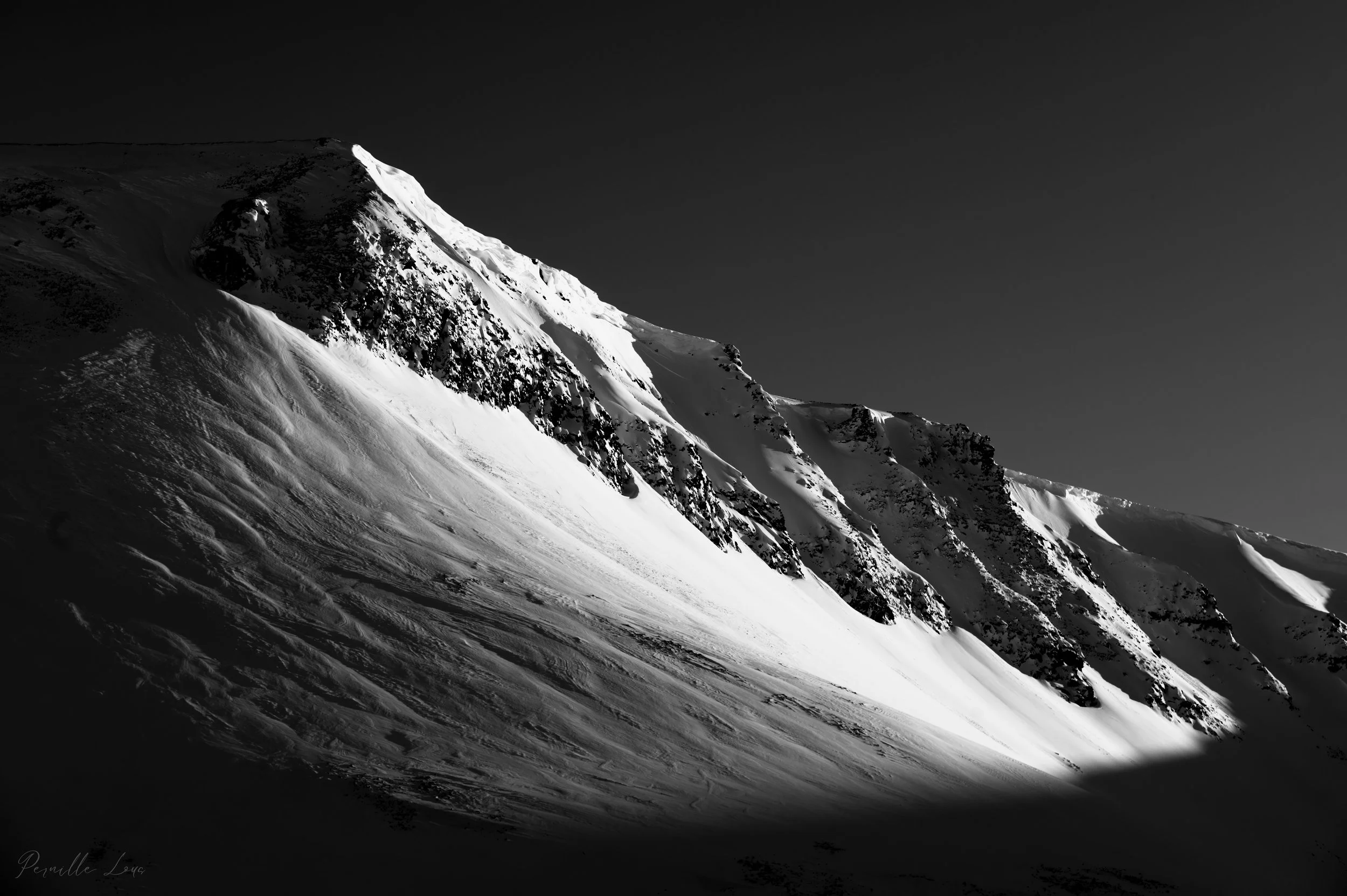
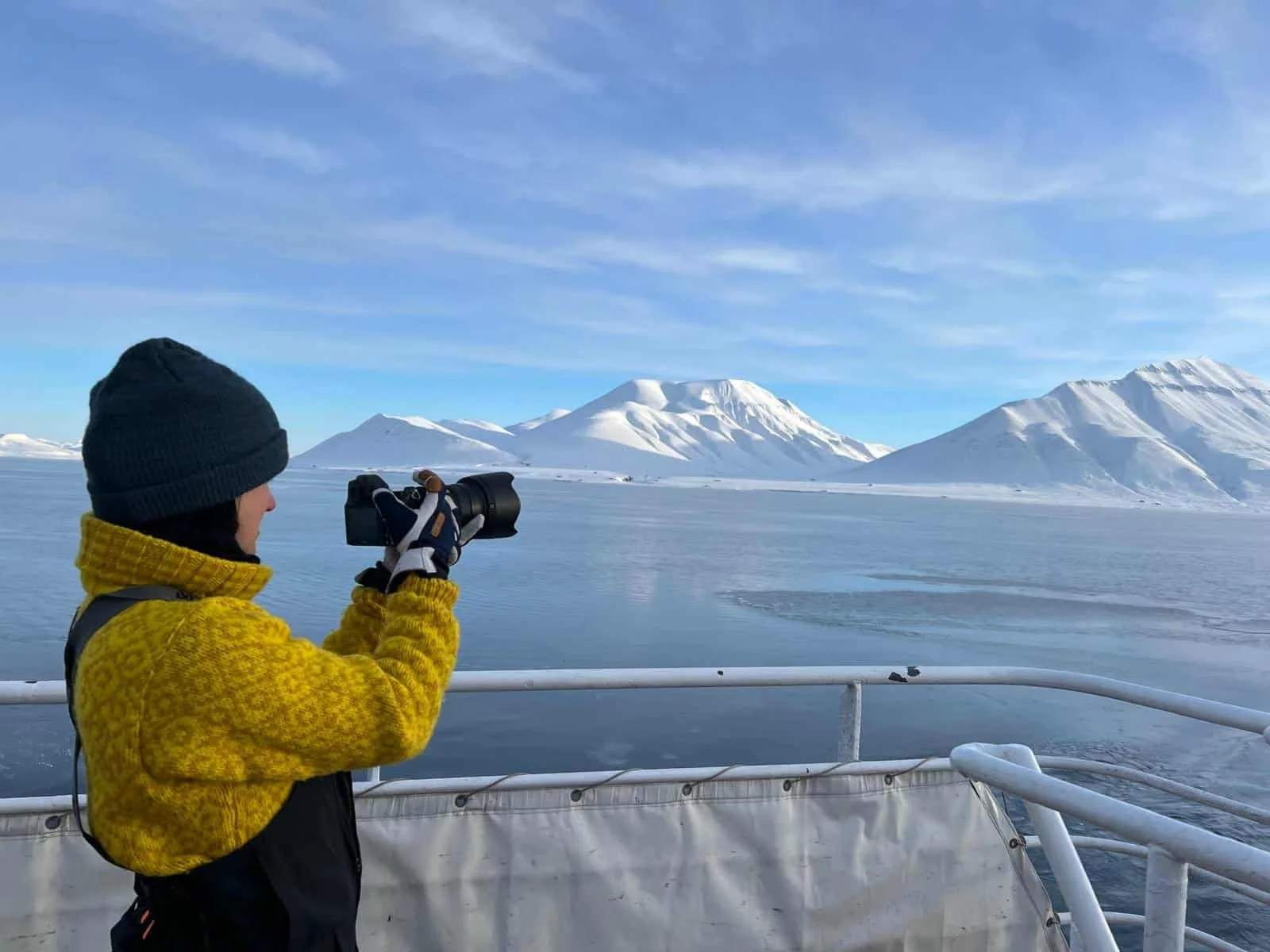
The B/W photo is taken with this lens and captures the light very finely. This shot is very little edited: converting into black and white and increasing the contrast. The light was already beautiful that day and this lens caught it with ease.
NIKKOR 105mm f/2.8G VR
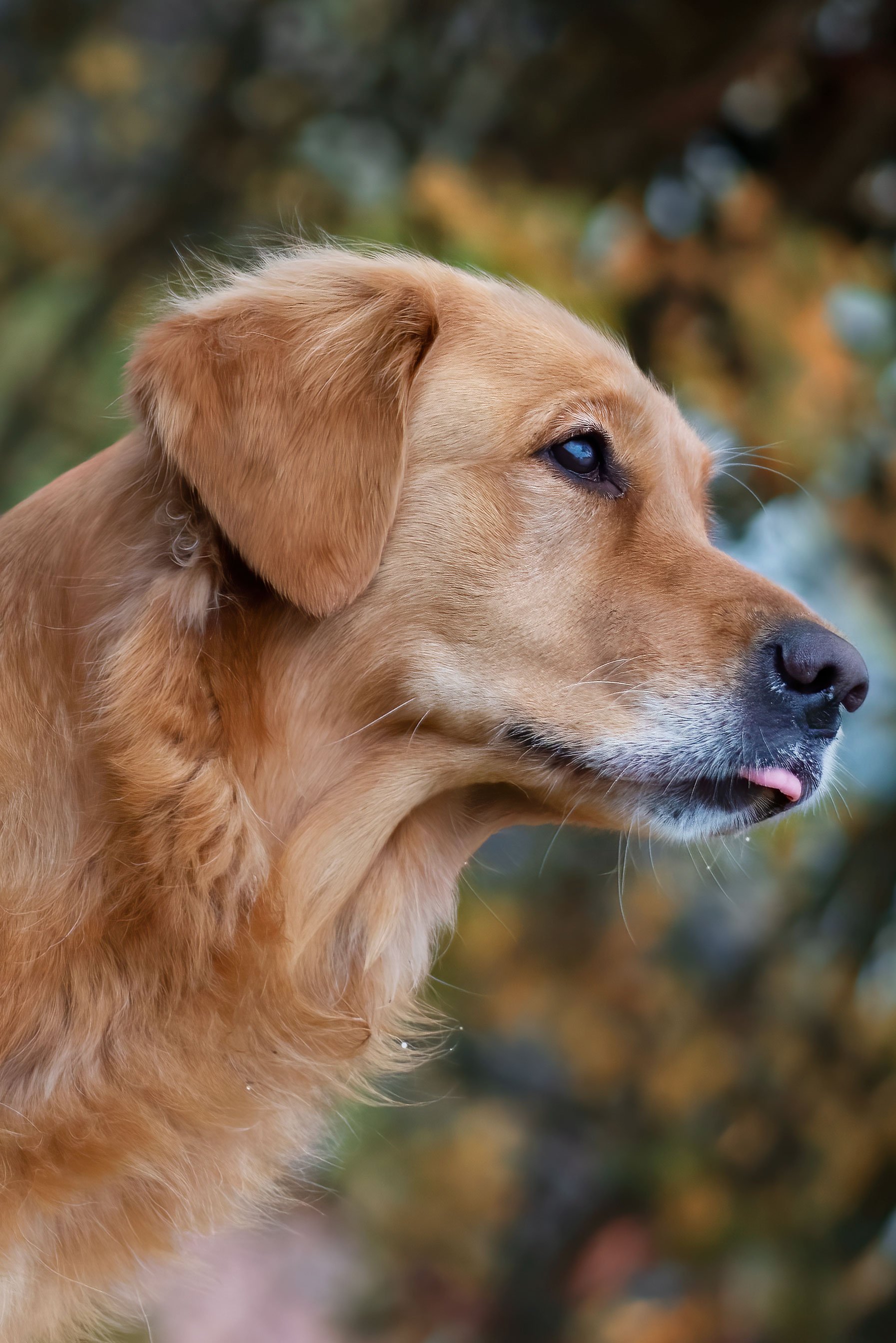
You might wonder what a prime like this is doing in my bag. This prime lens I use to do my dog portraits - both in the arctic and when I visit the mainland. This lens has given me some of my most beautiful shots. It is hard to compete with a prime - it gives beautiful bokeh and is the ideal portrait lens for dogs since we cannot always ask them what to do - meaning we have to move around anyway.
Irix 15mm f/2.4
Finally I have my wide-angle lens for Northern lights and astro shots. This lens DOES take great shots - however, I have to admit that its endurance does not stand the heavy beating of the Arctic. I have had issues with the physical components of this lens, screws, hood, focus, etc.
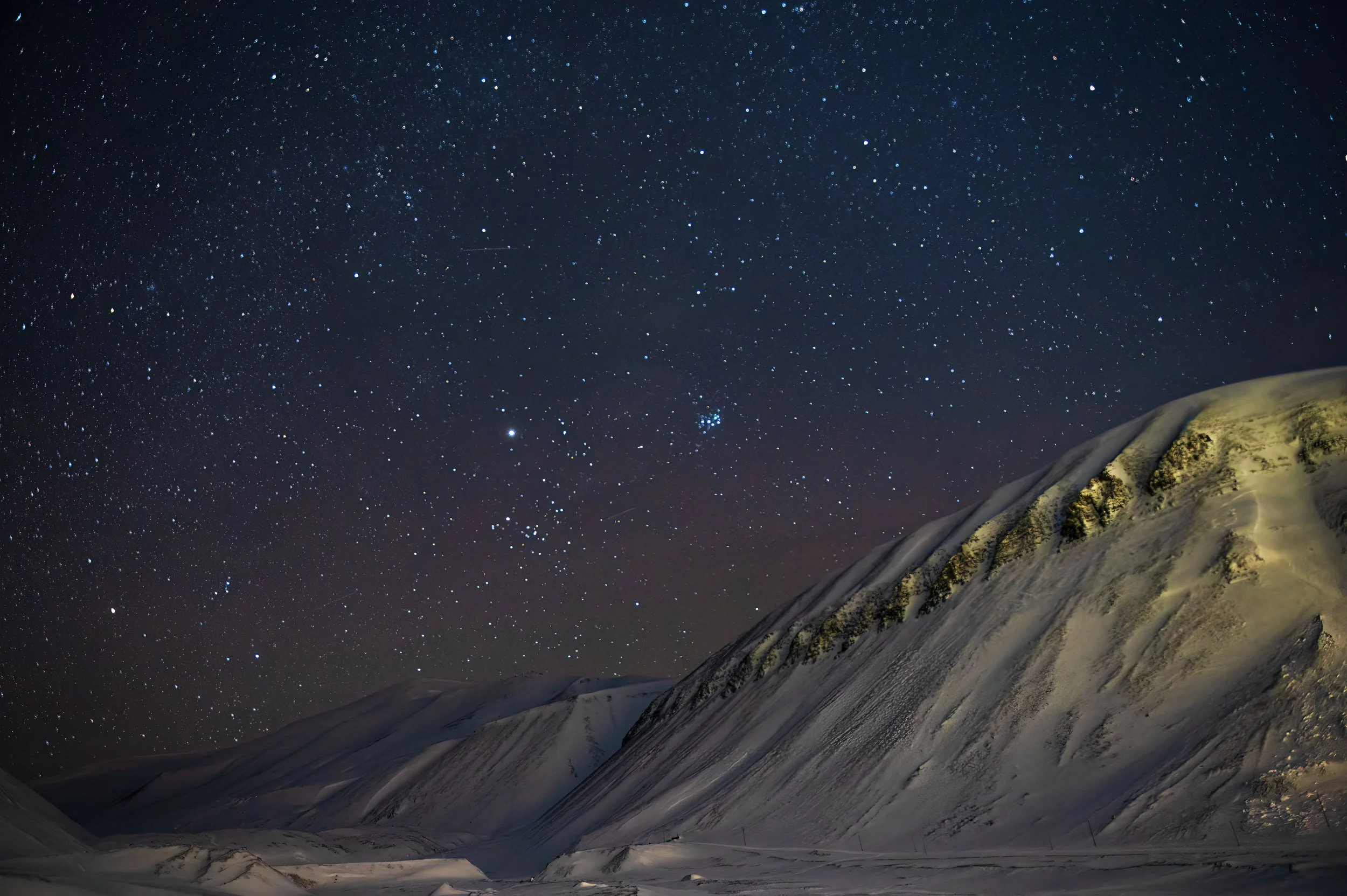
There is no doubt that it does take great photographs and with 15mm and f/2.4 it is great for Northern lights or stars and this shot is taken with this lens. However, comparing how much I have used this lens and how much I have used my other Nikon lenses - this one simply cannot keep up with the Arctic. If you are an astro-photography in a less challenging environment, I would give this lens a go.
So what lens should I bring to the Arctic?
This is a question I get quiet a lot: “What did you shoot this photo with?” “What should I bring if I go?”
The answer is: It depends on the season.
The light in the arctic is very tricky to work with. We have three months of complete darkness and three months of constant Sun - and when these swaps it goes very fast. Meaning we have short time with sunrise/sunset.
So the right question to ask is: What season are you going?
If you are going during the Midnight Sun you can bring any lens you want: Free light for all. If you go during Polar night or the Blue hour it is important to bring lenses that can either do astro-photography or take in loads of light. Leave the big 800mm f/6.3 at home during this time.
If you wish to shoot wildlife bring at least 200mm zoom - and the more light the lens can take, the broader is the season where it is good to visit.
Finally, ONLY bring your tripod if you plan to record or do Northern Lights or stars in the dark season. Tripod is to no use for wildlife here, unless you are alone/private tour. A small tripod like SmallRig you can have in your pocket is a good choice, though.
Taking care of your gear
Arctic is never kind to our gear no matter the season. Both Summer and Winter have its own challenges.
Winter:
It is easy to bring your camera under your arm and go out in freezing weather. However, the important part is when you come home. Always always put your camera back into your COLD camera bag and leave it there until the next day. If the camera gets heated up too quickly, condensation might occur on the glass and this is not an easy fix. The whole lens has to come apart for it to be removed.
Summer:
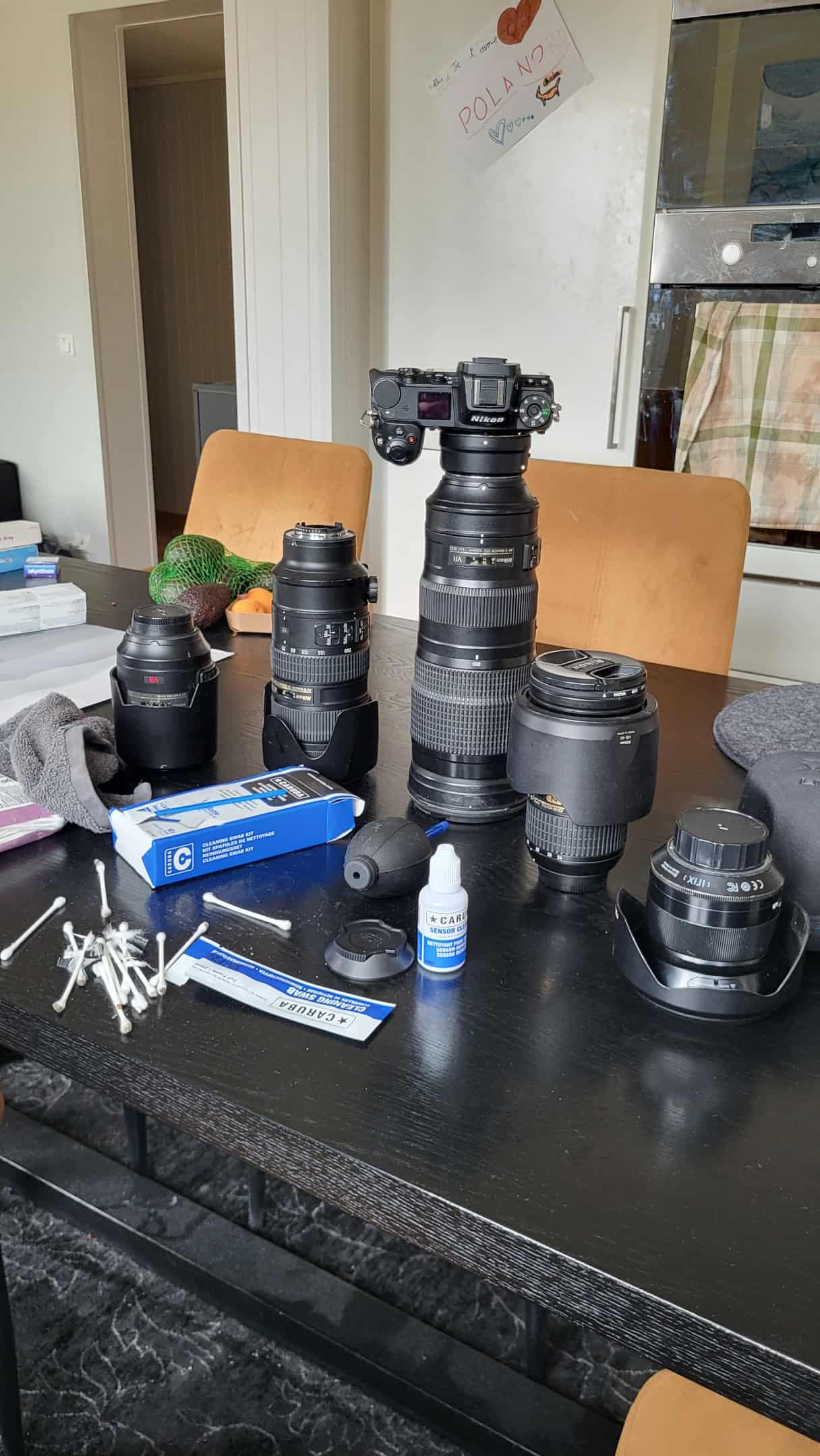
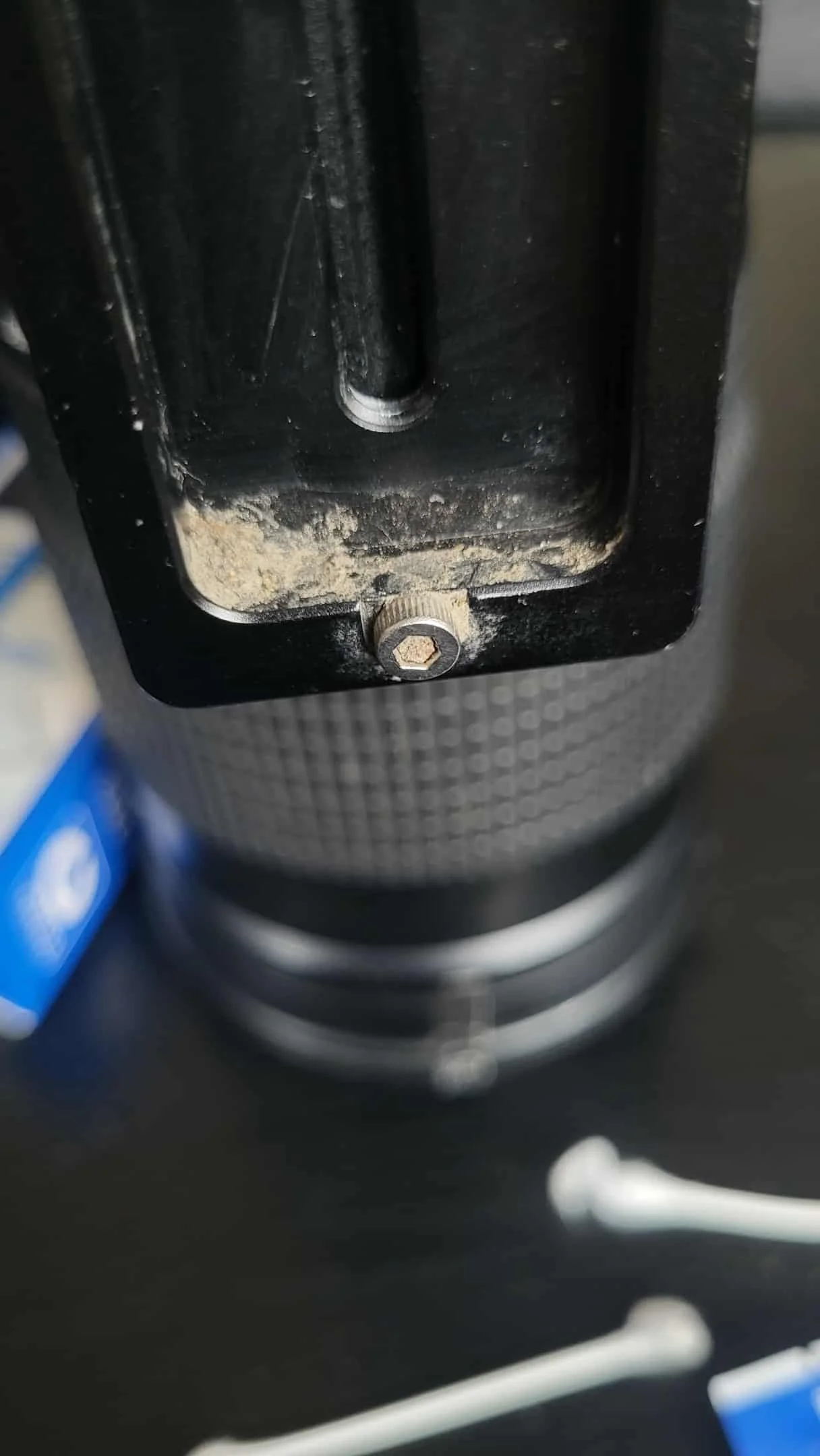
In Summertime we do not have condensation problems, but we do have dust issues. After some time in the Arctic you will find dust, dirt or even mud on your glass, lenses and camera. Make sure to keep cleaning it frequently to avoid noise on the glass or grindy metal parts.
Conclusion
Currently I am shooting with Nikon Z6 and I have been looking a long time at the Z9. The Z9 is unfortunately a little too heavy for the work I do, considering a lot of hiking is involved. I am currently looking at Nikon Z8. I have been very grateful for Nikon’s reliability, so I will stick to Nikon’s system. I also wish to encourage people to go out and shoot with their camera no matter the age of their gear and see that beauty can also be caught with your old gear.
The best cameras will not grand you great photographs or stories. The best photographs comes with an extraordinary experience you have in front of you and you are present to capture it.
My Nikon camera has gone through the wildest and toughest challenges and it has always worked. I keep it because it works, and that is what matters in the Arctic. We have no repair shop or camera store, we cannot order online and get it tomorrow. My camera has to work 100% everyday.
In the end of the day, it is the photographer who takes the photo, so I will have patience for the right new house to get out.